- info@ramsonsafaris.com
- +255 759 458261

General Travel Information for Tanzania
Area and Population
The United Republic of Tanzania consists of the mainland (Tanganyika) and the islands of Zanzibar and Pemba. The country covers a total area of 930,700 sq km. The current population is approximately 34 million, with a national growth rate of 2.8%.Capital
Dar es Salaam is the country’s major commercial centre and main harbour, while Dodoma is the official administrative capital.When to Go?
The coast, islands, and Selous Game Reserve enjoy a tropical climate all year round, while the rest of the country has a more temperate climate.
Short rains: November
Main rainy season: mid-March to end of May
During the rainy season, it can become quite chilly in the northern mainland, especially at higher altitudes such as Ngorongoro. High season is December and January. The hottest months are December to the end of March, when humidity is high and only drops at night.Visas
Visas are available on arrival at all airports and border points. Your passport must be valid for at least six months beyond your date of arrival. Visas must be paid in cash in US dollars. Remember to bring your yellow fever certificate!Health
Although the yellow fever vaccine is no longer compulsory for entry into Tanzania and Zanzibar, it is still strongly recommended. It should be taken at least 10 days before arrival. Visitors are advised to take anti-malaria medication — please consult your doctor well in advance. Common preventable diseases in Tanzania include amoebic dysentery, bacterial dysentery, typhoid, cholera, malaria, yellow fever, hepatitis A, bilharzia, and HIV/AIDS. Some vaccines need to be administered up to six months before travel. Important health tips:
Do not drink tap water or brush your teeth with it — use bottled mineral water (widely available).
Do not share eating utensils or drink from the same glass/bottle.
Rinse salads, fruits, and vegetables thoroughly in boiled or purified water.
Ensure meat is thoroughly cooked.
In the evening, wear long trousers and long sleeves, and sleep under a mosquito net.
Use mosquito repellent containing no more than 30% DEET.
Avoid swimming in lakes due to the high risk of bilharzia.
Booking with Ramson Tanzania Safari Tours includes AAR Emergency Rescue and Evacuation Insurance.Money Matters
The local currency is the Tanzanian Shilling (TSh), available in notes of 500, 1,000, 5,000, and 10,000. It is advisable to bring US dollars. Banks and forex bureaus also accept major convertible currencies. Please note that US$ bills printed before 1996 are no longer accepted in Tanzania (locally known as “kichwa kidogo”). Travellers’ cheques are widely accepted. Credit cards are accepted in larger hotels and some exchange offices, but cash or travellers’ cheques usually give a better rate. ATMs can be found in Arusha, Moshi, Dar es Salaam, and Stone Town (Zanzibar).What to Bring?
In Tanzania’s warm and humid climate, cotton is the most comfortable fabric. Avoid nylon and synthetic materials. Evenings on the mainland can be chilly, so bring a warm sweater or jacket. In exclusive restaurants a jacket and tie may be appropriate, but elsewhere dress is casual. Don’t overpack — laundry services are available in most hotels and guesthouses (same-day service at reasonable prices). Essential items:
Binoculars for safari
Extra film/memory cards and batteries
Sandals, sunglasses, swimsuits, sun hats, and high-factor sun cream
Flashlight (especially useful on camping safaris)
Swiss army knife, universal adapter, and reusable water bottle
What to Bring on a Safari
Sleeping bag
Flashlight and spare batteries
Sunglasses
Sun protection lotion
Mosquito repellent
Toiletry requirements and towel
Wash kit
Long-sleeved shirt/jumper
Trousers
Warm sweater
Hat
Binoculars
Camera and films/memory cards
Small daypack
When You’re Hungry
Tanzania offers a wonderful variety of food. Breakfast usually includes exotic fresh fruits, fruit juices, toast, or omelettes. Most hotels serve a continental breakfast. Traditional Tanzanian meals are generous and feature potatoes, rice, beans, spinach, ugali (stiff maize porridge), and chicken, beef, mutton, or fish. On the coast you can enjoy fresh tropical fish, lobster, and prawns. Larger towns have excellent Chinese, Italian, and Indian restaurants. Some places even serve game meat (crocodile, zebra, antelope) — but endangered species and the national symbol, the giraffe, never appear on the menu. Vegetarians are well catered for in most restaurants.Culture
Always shake hands with the right hand when greeting, parting, or passing/receiving anything. If your right hand is occupied, offer your right elbow. Never use the left hand (it is reserved for hygiene).
In national parks, strictly follow all regulations. Do not litter and never collect bones, skins, horns, teeth, feathers, shells, coral, or starfish.
Always ask permission before photographing people.
Along the coast the majority of the population is Muslim — dress modestly, covering shoulders and knees. Topless and nude bathing are prohibited.
Gay and lesbian travellers should avoid public displays of affection.
Tanzanians value calm and politeness. Displays of impatience or anger are frowned upon. A smile is far more effective than raising your voice.
The “Justice Mob”
Unfortunately, theft does occur in larger towns. If you are pickpocketed or mugged, think twice before shouting “thief!” A crowd may chase and severely beat the culprit before police arrive. This is a sad reality caused by frustration with local authorities. Your loss is upsetting, but it is better not to witness mob justice.Souvenirs
Popular items include batiks, wood carvings, Zanzibar chests, and Maasai jewellery. Prices are always negotiable — bargaining is expected and part of the fun. Be friendly, and a few words of Kiswahili will be greatly appreciated.Religion
Christian, Muslim, Hindu, and traditional beliefs are all practised.Language
The two official languages are Kiswahili and English. Kiswahili is the most widely spoken. English is understood in major cities, but a few basic Kiswahili phrases are very useful when travelling off the beaten track. Tanzania is also home to around 130 tribal languages.Insurance
Your travel insurance should cover medical assistance, repatriation, and theft.National Holidays
1 January — New Year’s Day
12 January — Zanzibar Revolution Day
Good Friday & Easter Monday
26 April — Union Day
1 May — International Workers’ Day
7 July — Sabasaba International Trade Fair
8 July — Peasants’ Day
9 December — Independence & Republic Day
25 December — Christmas Day
26 December — Boxing Day
Muslim holidays are also observed (dates depend on the sighting of the moon).International Airports, Taxes and Customs
The three international airports are Kilimanjaro, Dar es Salaam, and Zanzibar.
A departure tax of US$30 is payable when leaving Tanzania by air (cannot be paid in local currency). Import and export of Tanzanian shillings is illegal. Duty-free allowances: 1 litre of wine or spirits, 200 cigarettes (or 50 cigars or 250g tobacco), and 250ml perfume. Prohibited items (will be confiscated and may lead to legal action):
All ivory, rhino horn, turtle shells, coral, and related products
Exotic cat fur
Not Feeling Well?
Medical centres are available in all national parks and major towns. A flying doctor service operates for emergencies across the country. If you feel feverish, seek medical attention immediately.Communication
Country code: +255
International access code: 00
Phone lines can be unreliable and postal services are slow. Internet cafés are widespread and affordable (around US$1 per hour). Many also offer cheap internet phone services. Telefax is available in government offices, businesses, and tourist hotels. Telegrams can be sent from post offices. Radio frequencies (shortwave):
BBC: 21.47, 17.88, 15.42, 6.135 MHz
Voice of America: 17.89, 15.60, 9.575, 6.035 MHz
Begging
Please do not give money to people begging on the street — it encourages the practice. Offering food instead is more helpful. Street children in larger towns can be persistent; many are orphans or victims of abuse. A meal or a friendly smile has far more positive impact than cash (which may be used for glue or drugs). On safari, roadside children sometimes ask for pens or money. Giving to them encourages them to miss school and wait for tourists. Donations are best made directly to school administrators or hospitals.Safety
Tanzania is generally a peaceful and welcoming country. As in any unfamiliar destination, take normal precautions:
Never display valuables openly.
Keep money and passports in the hotel safe.
Ask locals which areas to avoid.
Always take a taxi after dark.
Opening Hours
Most shops: 9 am – 8 pm (weekdays), often closed for lunch. Many also open Saturday mornings; some for a few hours on Sunday.
Banks: 8:30 am – 4 pm (weekdays), until 1 pm on Saturday.Local Time
GMT +3 hours. Tanzanians are relaxed about time — “soon” can mean in an hour or more. There is also the traditional Swahili time system (6 hours ahead of normal time), but English speakers usually use standard time.Electricity
230 volts AC, 50 Hz.Embassies & High Commissions in Dar es Salaam
Country | Location | Telephone | Fax |
|---|---|---|---|
Algeria | 34 Ali Hassan Mwinyi Road | 2117619 | 2117620 |
Angola | 78 Lugalo Road, Upanga | 2117674 | – |
Belgium | 5 Ocean Road, Upanga | 2112688 / 2113466 | 2117621 |
Burundi | Plot No. 1007, Lugalo Rd, Upanga | 0812 241777 | 2121499 |
Canada | 38 Mirambo Street | 2112831/5 | 2116897 |
China | 2 Kajificheni Close | 2667586 / 2667694 | 2666353 |
Cuba | 313 Lugalo Road, Upanga | 2115928 | 2667026 |
Denmark | Ghana Avenue | 2113887/92 | 2116433 |
Egypt | 24 Ghana Avenue | 2113591 / 2117622 | 2112543 |
Finland | Mirambo Street, Garden Avenue | 2119170 | 2119173 |
France | Ali Hassan Mwinyi Road | 2666012 | 2668435 |
Germany | NIC Invest. House, Samora Avenue | 2117409/15 | 2112951 |
Great Britain | Social Security House, Samora Avenue | 2117659/64 | 2112951 |
Hungary | 204 Chake Chake Road, Oysterbay | 2668573 | 2267214 |
India | NIC Invest. House, Samora Avenue | 2117175/6 | 2118761 |
Indonesia | 299 Ali Hassan Mwinyi Road | 2119119 | 2115849 |
Ireland | 1131 Msanani Road | 2666211 / 2666348 | 2667852 |
Italy | 316 Lugalo Road, Upanga | 2115935/6 | 2115938 |
Japan | 299 Ali Hassan Mwinyi Road | 2115827 / 2115829 | 2115830 |
Kenya | NIC Invest. House, Samora Avenue | 2112955/7 | 2113098 |
Malawi | NIC Life House, Sokoine Drive | 2113240 | 2113360 |
Mozambique | 25 Garden Avenue | 2116502 | 2116502 |
Netherlands | ATC House, Ohio Street | 2130428 / 2118566/8 | 2112828 |
Nigeria | Karibu Hotel, Haile Selassie Avenue | 2667620 | 2668947 |
Norway | Mirambo Street | 2113366 / 2113610 | 2116564 |
Pakistan | 149 Malik Road, Upanga | 2117630 | 2113205 |
Poland | 63 Aly Khan Road, Upanga | 2115271 | 2115812 |
Romania | 11 Ocean Road, Upanga | 2115899 | 2113866 |
Russia | 73 Ali Hassan Mwinyi Road | 2666005/6 | 2666818 |
Rwanda | 32 Ali Hassan Mwinyi Road | 2130119 | 2115888 |
South Africa | Mwaya Road, Msanani | 2600484/5 | 2600684 |
South Korea | 1349 Haile Selassie Avenue | 2600496 / 2602000 | 2600559 |
Spain | 99B Kinondoni Road | 2666936 / 2666018 | 2666938 |
Sudan | 64 Ali Hassan Mwinyi Road | 2117641 | 2115811 |
Sweden | Mirambo Street, Garden Avenue | 2111235 | 2113420 |
Switzerland | 79 Kinondoni Road | 2666088/9 | 2666736 |
Syria | 276 Aly Khan Road, Upanga | 2117656 / 2118782 | 2115860 |
Uganda | Extelcoms House, Samora Avenue | 2117667 | 2112947 |
U.S.A. | 140 Msese Road, Kinondoni | 2666010/5 | 2666701 |
Yemen | 135 United Nations Road | 2110615 | 2115924 |
Zambia | Ohio Street / Sokoine Drive | 2118481/2 | 2112977 |
Zimbabwe | NIC Life House, Sokoine Drive | – | – |
We hope this information helps you prepare for a safe and memorable trip. Any questions? Just let us know!
Spice tours – Muscat, vanilla, cinnamon, pepper, ginger and other spices and fruits so exotic that they don’t have an English name, can be explored in the many plantations.
The slave chambers – The underground slave chambers in Mangapwani was the center of the illegal slave trade up until 1909.
Persian baths – On the highest point of the island, Kidichi, the sultan Sayyind Said built Persian baths in 1850, one for him and one for his wife. They are still in a good condition with splendid Persian architecture, so a visit here will be more than worth your time.
Prison Island – In the middle of this island, you will find the remains of an old prison built in 1893. Half an hour by boat, you pay a modest fee to enter the island, which is ideal for snorkeling and watching giant turtles, imported from the Seychelles at the end of the century.
Jozani Forest – The only remaining natural forest on Zanzibar, where the rare red guerexa monkeys habituate. The best time to go to Jozani is in the early morning hours, when the monkeys are active.
Swimming with dolphins – Taking place in the southern part of the island, the boat ride is long, and you are not guaranteed to find dolphins, but when you finally do, and if you get the chance to join them in the water, it will be an extraordinary experience.
Deep sea fishing – Zanzibar, Pemba and Mafia are excellent islands for sports fishing. Do as Ernest Hemingway and catch sailfish, mackerel, kingfish and marlin among others.
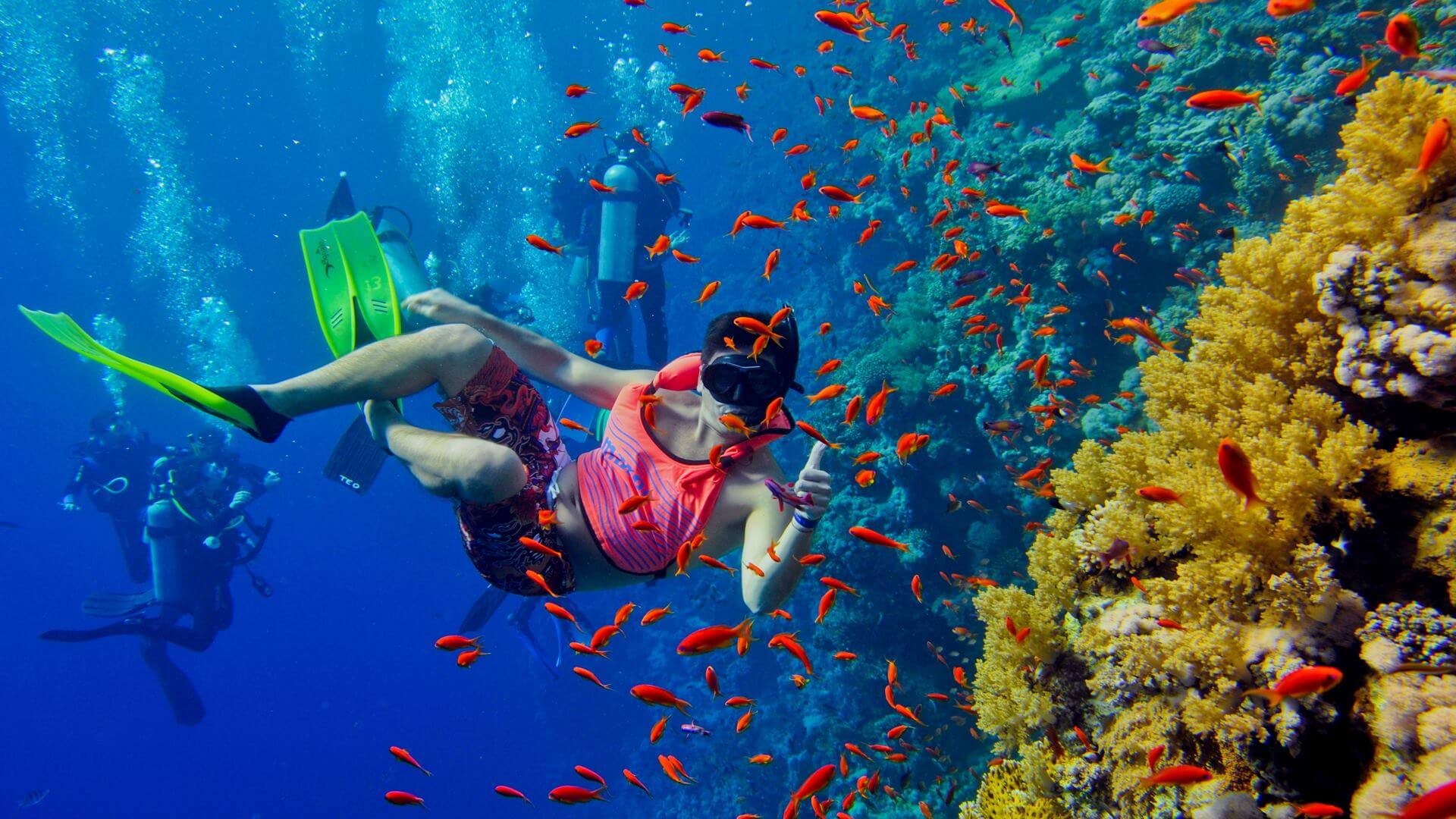
Diving – Coral reefs, tropical fish and clear water make this area ideal for scuba diving. Take a diving course, get your certificate and jump in the Indian Ocean.
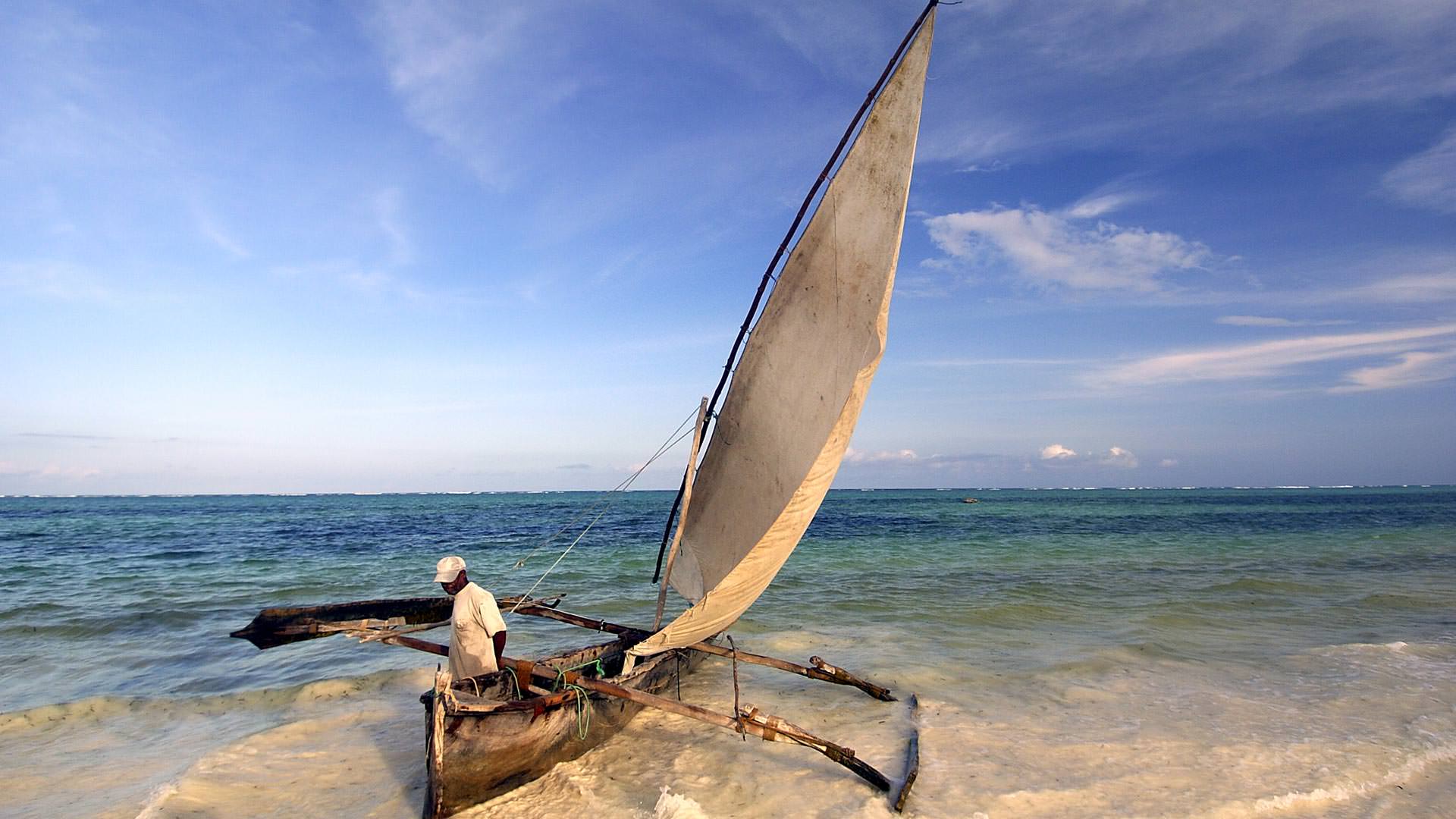
Sailing and water sports – Windsurfing and sailing are popular activities, and can be organized many places.
ZIFF – The Zanzibar International Film Festival was established in 1997 to promote the art and culture of the Dhow region. The Dhow region consists of the Arabian Peninsula, the Indian sub-continent, Asia, Africa and the Indian Ocean Islands.